
How Much Money Do You Need to Buy a House in Arizona?
A plain-language breakdown of the cash needed to buy a home in Arizona: earnest money, down payment, closing costs, prepaids and reserves, with examples.

Homeownership Arizona Real Estate Buying a Home

The short answer
Arizona property taxes are based on a home's limited property value (LPV), which by law can rise no more than 5% a year, multiplied by an assessment ratio (10% for a primary residence) and the combined tax rates of every district that taxes the parcel. Owner-occupied homes also get an automatic state homeowner rebate on part of the school tax. Taxes are paid in two installments, due October 1 and March 1, and most buyers with a mortgage pay them monthly through an escrow account.
Property taxes are one of the most common "wait, how does that work?" questions I get, especially from buyers moving from another state. Arizona's system has a few unique pieces, and once you understand them, it's much easier to estimate your real monthly payment. This is a general explanation, not tax advice. For your situation, talk to a CPA or contact your county assessor.
Two county offices are involved, and it helps to know which one to call.
The tax rates themselves are set by the governments and districts that levy taxes, like the county, city, school district, community college district and special districts.
Your Notice of Value shows two numbers.
Under Proposition 117, which voters approved in 2012 and which took effect beginning with the 2015 tax year, a property's LPV generally can't increase more than 5% over the prior year's LPV. The LPV also can never be higher than the FCV. The 5% limit doesn't protect against changes like new construction, an addition or a change in how the property is used, which can reset values.
What this means in practice: even if home values jump in a hot year, the value used for your taxes rises more gradually. And if your LPV is well below your FCV, your LPV may keep climbing up to 5% a year even when the market is flat. That's why your tax bill can rise in a year when prices didn't.
Arizona doesn't tax the full LPV. It multiplies the LPV by an assessment ratio based on the property's legal class to get the assessed value. Residential property is generally in one of two classes:
Commercial and other property classes use different ratios. Even though Class 3 and Class 4 share the same ratio, the classification still matters, because only Class 3 qualifies for the homeowner rebate and the 1% cap below.
The basic formula is:
LPV × 10% assessment ratio = assessed value. Assessed value × (combined tax rate per $100 ÷ 100) = tax, before the homeowner rebate.
Tax rates are expressed per $100 of assessed value and vary a lot by location, because each parcel sits in a different combination of city, school and special districts.
When you buy, the Affidavit of Property Value that's recorded with your deed asks whether the home will be your primary residence, a rental or a secondary residence. Your title or escrow company prepares it, so make sure that answer is right. You can have only one primary residence, in Arizona or anywhere else. Assessors also periodically send owners an affidavit to confirm primary residence status, and not returning it on time can lead to reclassification as Class 4. If you notice your home is coded as Class 4 when you live there, contact the assessor; they have a reclassification application for owner-occupied homes. Check the assessor's site for current forms and deadlines.
For Class 3 homes, the state pays part of the primary school district tax. It shows on the bill as a line often labeled "State Aid to Education." Under A.R.S. § 15-972, the rebate is currently 50% of the qualifying school district primary tax, capped at $600 per residence per year. It's applied automatically when the home is classified as a primary residence. Rentals and second homes don't receive it.
Arizona splits property taxes into two groups:
The Arizona Constitution limits primary property taxes on owner-occupied residential property to 1% of the property's limited value. Secondary taxes aren't included in that cap, which is why your bill can be higher than 1%.
Your bill may include a number of special districts, such as fire districts, flood control, library districts and the Central Arizona Water Conservation District. In many newer master-planned communities, especially in the West Valley, you may also see a community facilities district (CFD). A CFD is a special taxing district that pays for roads, water and sewer lines or other infrastructure, often through bonds paid off over many years by the homes in the district.
CFD charges can make a real difference in your monthly payment, so look at the full tax bill for any home you're considering in places like Buckeye or Goodyear. Builders and sellers should disclose them, and the Arizona Department of Real Estate public report for a new subdivision discusses them too.
Arizona taxes are billed once a year, usually in late summer or early fall, and can be paid in two halves:
| Installment | Due | Delinquent after |
|---|---|---|
| First half | October 1 | 5:00 p.m. on November 1 |
| Second half | March 1 (the following year) | 5:00 p.m. on May 1 |
If a delinquency date falls on a weekend or holiday, it moves to the next business day. For example, the Maricopa County Treasurer listed the 2026 first-half delinquency as after 5:00 p.m. on November 2, 2026. If you pay the full year by December 31, interest on the first half is generally waived. Bills of $100 or less are due in full with the first half. Late payments accrue interest, so if you pay directly, put the dates on your calendar. Always check your county treasurer's calendar for the current year's exact dates.
You don't need to guess what a home's taxes are. Before you make an offer:
One big caution: if the current owner has a rental classification or a senior or disability exemption, the current bill may not reflect what you'll pay. Ask your lender to estimate taxes based on your own classification, and remember that the LPV is what matters, not your purchase price.
Because taxes are paid in arrears, the title or escrow company prorates taxes between buyer and seller at closing. Depending on the time of year, you may receive a credit from the seller or reimburse the seller for taxes they've prepaid. You'll see this on your Closing Disclosure.
Most buyers with a mortgage pay taxes and insurance monthly through an escrow account, sometimes called impounds. Your lender collects 1/12 of the estimated annual taxes and insurance with each payment, then pays the county when bills come due. At closing, you'll usually fund an initial deposit. Under federal rules from the CFPB (Regulation X), the servicer may keep a cushion of up to one-sixth of the estimated annual escrow payments.
Each year your servicer runs an escrow analysis. If taxes or insurance went up, your monthly payment may rise to cover the shortage. That's normal, but it surprises a lot of first-year owners. Learn more on the CFPB's escrow account page.
Arizona offers some limited programs, such as exemptions for certain widows, widowers and people with disabilities with income and value limits, and a Senior Property Valuation Protection Option for qualifying seniors. Details and limits change, so check with your county assessor for current eligibility.
If you think your Notice of Value is wrong, you can appeal within the window printed on the notice. The assessor's site explains the process.
When you're comparing homes, plug the actual tax figure into my mortgage calculator instead of a generic estimate, because two homes with the same price can have very different tax bills. My free Arizona homebuying costs checklist covers taxes alongside every other cost to plan for, and how much money you need to buy a house in Arizona puts it all together.
The limited property value used to calculate taxes generally can't rise more than 5% a year under Proposition 117, unless there's new construction or a change in use. But your total bill can rise by more than that if tax rates go up or voters approve new bonds or overrides.
The first half is due October 1 and becomes delinquent after 5:00 p.m. on November 1. The second half is due March 1 and becomes delinquent after 5:00 p.m. on May 1. If a date falls on a weekend or holiday, it moves to the next business day. Check your county treasurer for current dates.
For owner-occupied primary residences (Legal Class 3), the state pays part of the primary school district tax. Under A.R.S. § 15-972 it's currently 50% of that tax, up to $600 per year. It's applied automatically when your home is classified as your primary residence.
A community facilities district is a special taxing district, common in newer master-planned communities, that pays for infrastructure like roads and water lines. It appears as a separate line on the property tax bill and isn't subject to the 1% cap on primary taxes, so check the full bill before you buy.
Not necessarily. Your taxes are based on the property's limited value and classification, not your purchase price, but the seller may have had a different classification or an exemption. Look up the parcel and ask your lender to estimate taxes for your situation.
This article is general information, not legal, tax, lending or financial advice. Programs, rules and costs change, so confirm details with the right professional for your situation.
Get a plan that fits your budget, timeline and the areas you love. I’ll explain every step in plain language. Start with the free Arizona Homebuying Costs Checklist, sent straight to your inbox.
Prefer to talk? Book a free 15-minute call or call/text 602-908-1719.

A plain-language breakdown of the cash needed to buy a home in Arizona: earnest money, down payment, closing costs, prepaids and reserves, with examples.
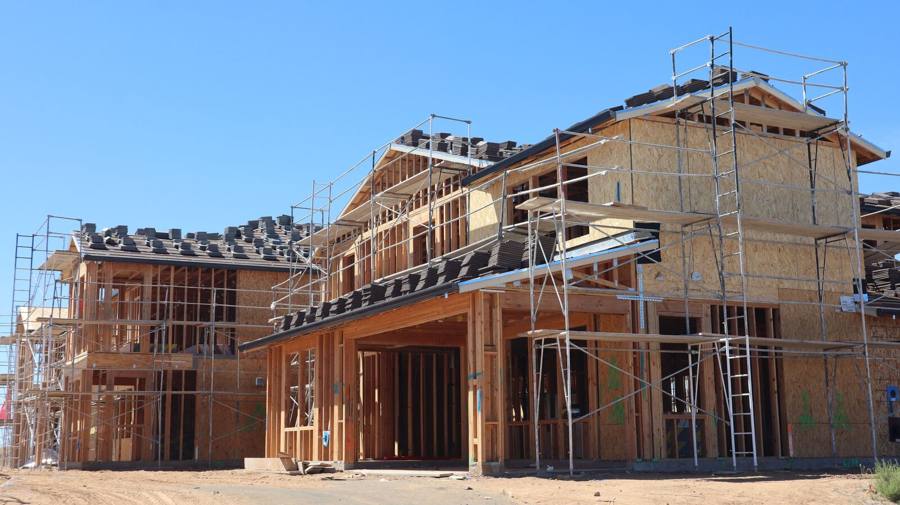
Thinking about a new build in Phoenix or the West Valley? Builder contracts, incentives, lot premiums, upgrades, CFDs, inspections, warranties and timelines.

Avoid common first-time homebuyer mistakes in Arizona, from skipping preapproval and underestimating costs to rushing inspections and missing deadlines.